Prophetic Resistance
Minneapolis Tragedy and Violated Rights

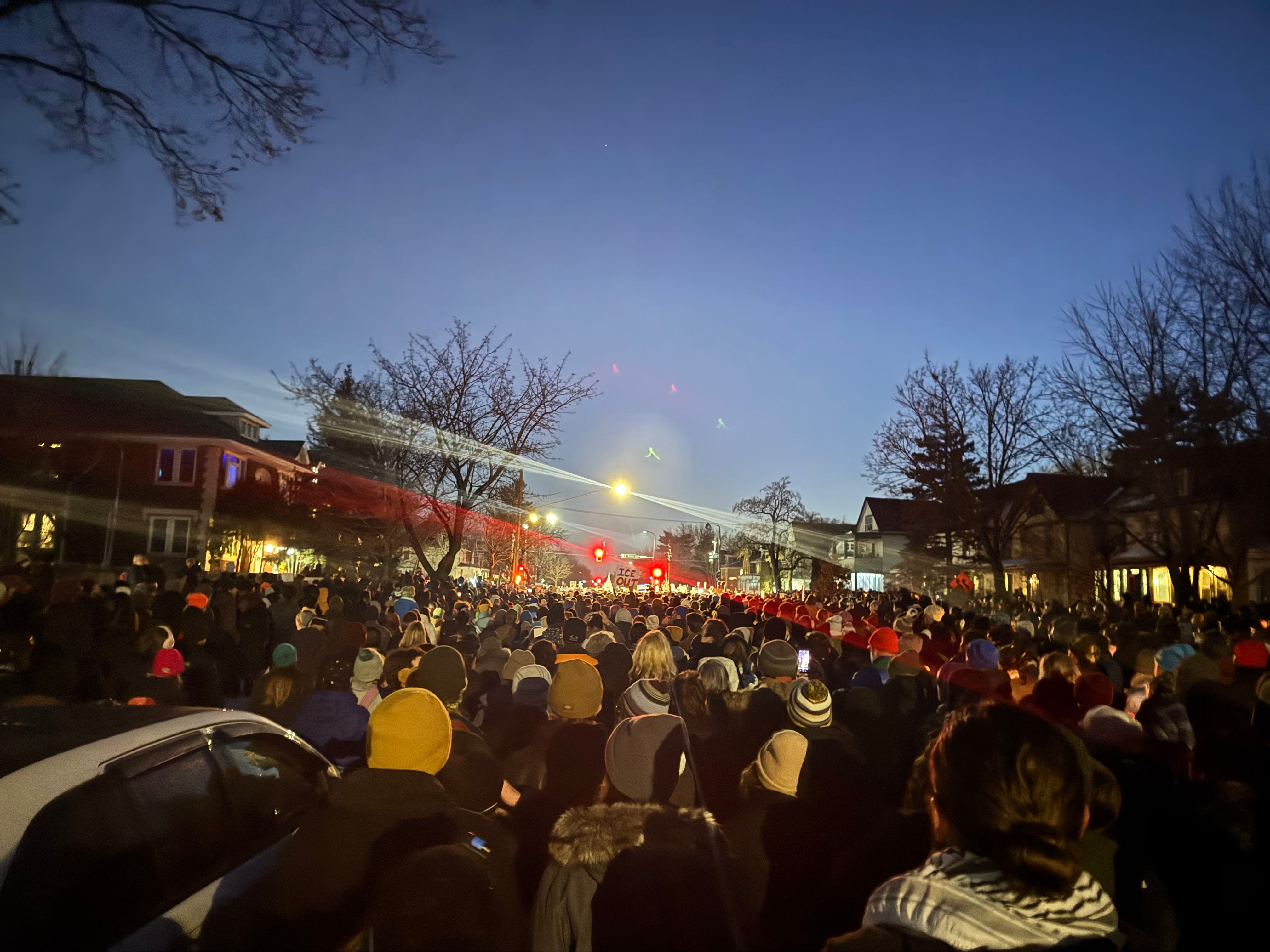
In early January 2026, a shocking incident in Minneapolis jolted the nation. During what officials touted as the largest immigration enforcement operation ever – a deployment of some 2,000 federal agents in the Twin Cities area – an agent of U.S. Immigration and Customs Enforcement (ICE) fatally shot 37-year-old Renee Nicole Good, a U.S. citizen, while she sat unarmed in her car. Good, a local writer and mother, was killed only blocks from her home under circumstances that remain hotly disputed. Federal authorities, including President Trump, were quick to claim the agent acted in self-defense, alleging that Good tried to run him over. But multiple eyewitnesses and journalists have contested the official story, and even the Minneapolis mayor bluntly told ICE to “get out” of the city. In fact, Minnesota’s attorney general, Keith Ellison, and Congresswoman Ilhan Omar maintain that Good had been present merely as a legal observer of the ICE raid – exercising her civic right to watch and document law enforcement – when she was gunned down. Her death, the ninth shooting by ICE in a few months, has sparked outrage and mass protests in Minneapolis and beyond. Many see this tragedy as the latest example of American rights being violated under the guise of enforcement, raising urgent questions about how citizens should respond when those tasked with upholding the law commit injustices.
Civil Disobedience and Moral Law
The United States has a proud tradition of dissent against unjust authority. From the Boston Tea Party to the Civil Rights Movement, Americans have often engaged in civil disobedience – the refusal to comply with certain laws or commands – to uphold higher principles of justice. As Dr. Martin Luther King Jr. wrote from his Birmingham jail cell, “one has not only a legal but a moral responsibility to obey just laws. Conversely, one has a moral responsibility to disobey unjust laws.” In other words, blind obedience is not a virtue when the law itself becomes a tool of oppression. The Constitution guarantees us rights to free speech, peaceful assembly, and petitioning the government; these are the lawful avenues to resist and seek redress when authorities overstep. Yet, when even these rights are trampled – for example, if peaceful protesters and observers like Good are met with violence – citizens face a dilemma. Do we simply comply and stay silent, or do we take a stand, even if that means breaking minor rules or defying authorities’ commands? American history and conscience lean toward the latter. Indeed, civil rights advocates argue that the current administration has “normalized the erosion of constitutional rights, framing brutality as enforcement and accountability as weakness.” Such a climate makes prophetic resistance not only permissible but necessary: a stance where moral truth is valued above unjust regulations.
A Prophetic Mandate to Resist
This idea of standing up to injustice is deeply rooted in Islamic teachings as well. The Quran and the sayings of Prophet Muhammad (peace be upon him) consistently urge believers to resist oppression and side with the oppressed. The Quran asks rhetorically, “And what is [the matter] with you that you do not fight in the cause of Allah and for the oppressed – men, women, and children – who cry out: ‘Our Lord! Rescue us from this town of wrongdoers...’?” Standing up for the vulnerable is portrayed as a God-given duty. Similarly, the Prophet Muhammad emphasized active opposition to wrongdoing. He said, “Whoever of you sees an evil, let him change it with his hand; if he is not able, then with his tongue; and if he is not able, then with his heart – and that is the weakest of faith.” In other words, do something when you see injustice – physical action if possible, speaking out at minimum, and at the very least feeling the moral outrage internally. Doing nothing is not an option in the prophetic model.
Perhaps most striking is a famous hadith about speaking truth to power. When asked what the best form of struggle (jihad) is, the Prophet replied: “The best jihad is a word of truth in front of a tyrannical ruler.” This elevates non-violent resistance – telling the hard truth to an oppressive authority – as a supreme act of faith and courage. Throughout Islamic history, we see examples of this prophetic resistance: Prophet Moses confronted the tyranny of Pharaoh armed only with God’s words; early Muslims in Mecca endured persecution rather than bow to idol worship; the Prophet’s grandson Husayn ibn Ali stood against a corrupt ruler, sacrificing his life at Karbala rather than legitimize injustice. These stories, beloved in the Muslim tradition, all teach that resisting oppression is not an act of sedition, but a fulfillment of one’s moral and spiritual duty. Faith is not meant to be a passive affair – it calls believers to “enjoin the good and forbid the evil,” even when doing so is dangerous or unpopular.
Balancing Resistance and Responsibility
How, then, do we translate these principles into action as citizens? Both American law and Islamic ethics provide guidance on responsible resistance. First, any form of protest or resistance must strive to uphold justice rather than descend into chaos. The Quran cautions believers: “O you who believe! Be steadfast in justice... and do not let the hatred of a people prevent you from being just. Be just; that is nearer to righteousness.” This means that even as we oppose abusive agents or unjust laws, we must not become unjust ourselves. Peaceful protests, legal challenges, vigils, and speaking truth to officials are all morally sound methods of resistance. What crosses the line is when activism turns into the very oppression or violence we initially stood against. If a protester were to harm innocent people or spread hate, that activism has gone too far – betraying the cause of justice. Both our faith and democratic values call us to a higher standard: to resist without rancor and to fight injustice without abandoning fairness. We are reminded that a good end cannot justify evil means.
At the same time, we have a responsibility toward our fellow citizens – both those facing oppression and even those perpetrating it. The Prophet Muhammad instructed, “Help your brother, whether he is an oppressor or he is oppressed.” When his companions, puzzled, asked how one could help an oppressor, he answered: “By preventing him from oppressing others.” This profound teaching aligns perfectly with civic duty. It means we should help victims of injustice, but also intervene to stop the wrongdoing of police or officials – because in doing so, we actually help save the soul of our society (and perhaps even the oppressor from further guilt). In practical terms, our duty as citizens is to hold our government and law enforcement accountable. We owe loyalty not to any agency or leader unconditionally, but to the principles of justice and mercy. When authorities respect those principles, we support them; when they violate them, we must lawfully oppose them. That could mean voting out officials who enable abuses, supporting lawsuits against unconstitutional practices, volunteering as legal observers, or simply recording an incident on your phone. It definitely means speaking up – at city council meetings, in the media, in our workplaces and mosques – to say this is not acceptable in our America.
Conclusion: Answering the Call
Moments like the killing of Renee Good serve as a test of our collective character. It is easy to feel intimidated when armed agents patrol our neighborhoods or cynical when leaders dismiss a grieving community. But our silence in the face of tyranny makes us complicit. The Prophet warned that when people witness oppression and fail to oppose it, they invite divine wrath upon all. History, too, warns us: as one famous saying goes, “If you are neutral in situations of injustice, you have chosen the side of the oppressor.” We cannot afford that neutrality. Prophetic resistance calls each of us – Muslim or otherwise – to find the courage of our convictions. It calls us to stand up, as our faith and conscience demand, before more lives are lost and more rights trampled. This doesn’t mean resorting to violence or anarchy; it means moral, creative, and persistent non-cooperation with injustice. It means believing, as our faith teaches, that truth spoken with sincerity is more powerful than bullets, and that patience and prayer go hand in hand with protest and policy change.
So what can you do? Start by learning about what’s happening in your community. Reach out to neighbors who are scared. Support organizations fighting for justice. Contact your representatives to demand oversight of agencies like ICE. Join peaceful rallies calling for change. Most importantly, do not sit on the sidelines. Each of us has a role in building the just society we envision. Renee Good’s death is a tragic loss, but it must not be in vain. Let it ignite in us the kind of prophetic resistance that heals our nation: resistance rooted in love, justice, and unshakeable hope for a better tomorrow. The prophets would expect no less from us, and future generations will ask what we did in this moment. It’s our duty to answer that call – with both our words and our deeds.
Citations

Killing of Renee Good - Wikipedia
https://en.wikipedia.org/wiki/Killing_of_Renee_Good

Killing of Renee Good - Wikipedia
https://en.wikipedia.org/wiki/Killing_of_Renee_Good
Killing of Renee Good - Wikipedia
https://en.wikipedia.org/wiki/Killing_of_Renee_Good
Letter from the Birmingham Jail
https://people.uncw.edu/schmidt/201Stuff/F14/B%20SophistSocrates/MLK%20letter.html

Surah An-Nisa - 75 - Quran.com
https://quran.com/en/an-nisa/75

https://sunnah.com/nawawi40:34

Inviting Reflections: Holy Qur’an on Jihad (29).
https://www.linkedin.com/pulse/inviting-reflections-holy-quran-jihad-29-prof-dr-m-akram-chaudhary

Surah Ma’idah Ayat 8 (5:8 Quran) With Tafsir - My Islam
https://myislam.org/surah-maidah/ayat-8/

The Islam Awareness Blog: Hadith against Oppression
https://blog.islamawareness.net/2010/03/hadith-against-oppression.htmlProphetic Resistance